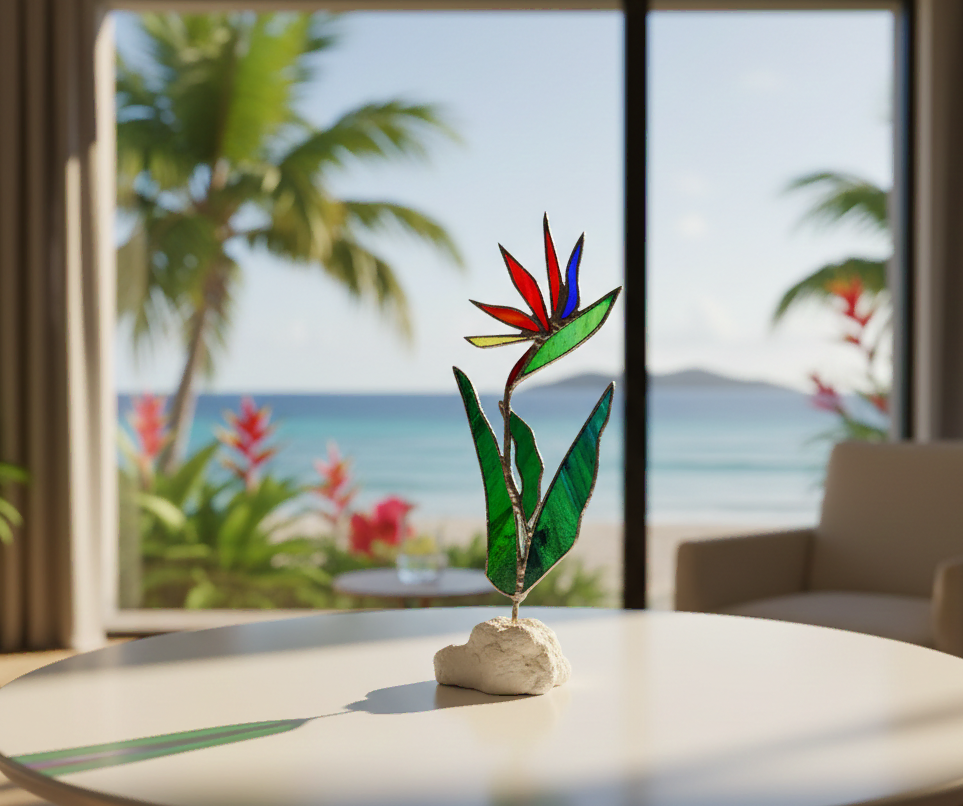
Hawaii Spirit Through Art
Where Nature, Culture, and Light Exist in Perfect Harmony
Some places leave us with beautiful memories. Others leave us with a new way of seeing the world. Hawaiʻi is one of those rare places.
Rising from the heart of the Pacific Ocean, these volcanic islands reflect an extraordinary harmony between nature, culture, and spirit—a source of inspiration for artists and visionaries across generations.
For me, Hawaiʻi embodies the belief that art is more than something we admire. It is a bridge to the natural world, inviting us to slow down, appreciate beauty, and live with intention.
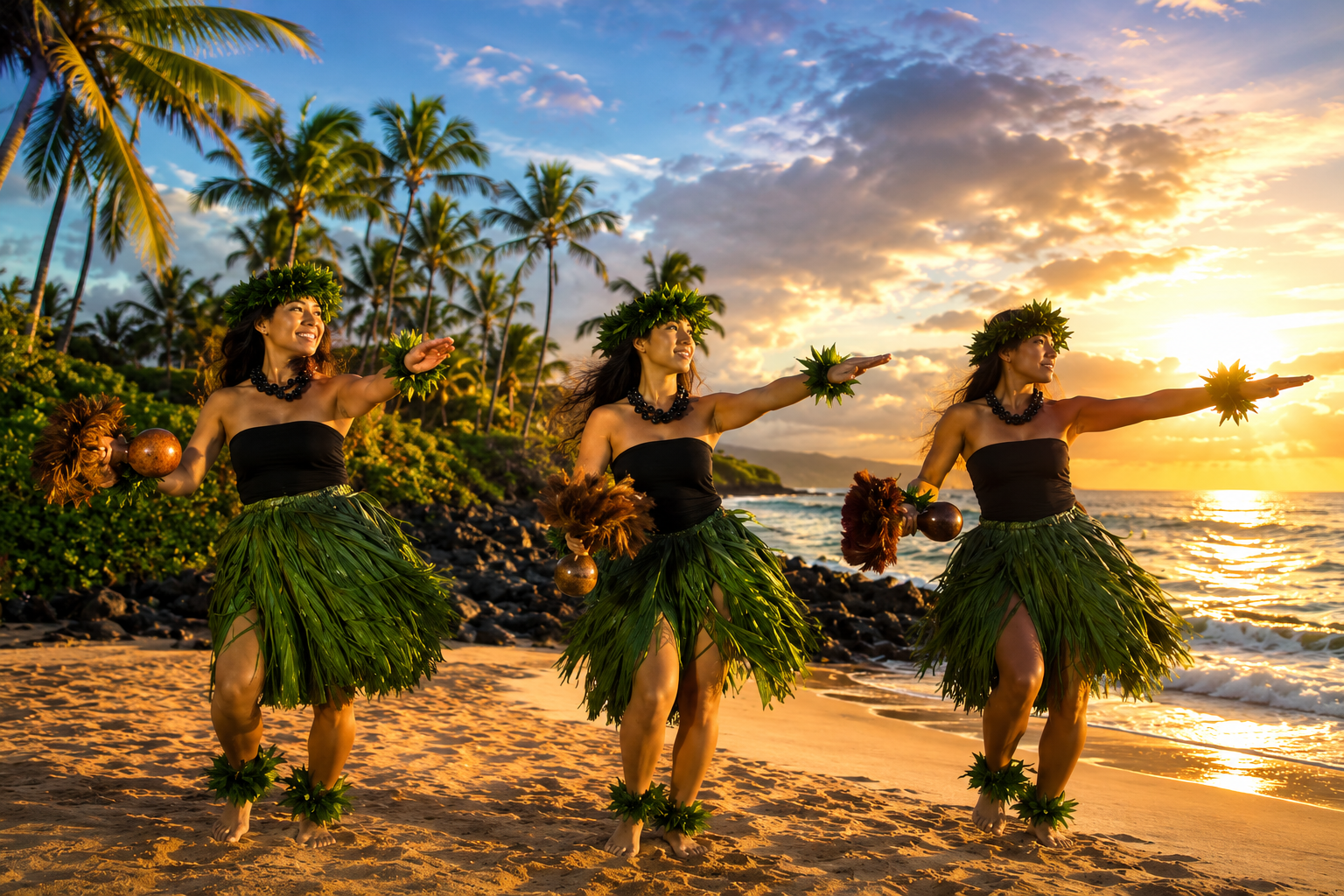
Like stained glass, hula transforms movement and light into emotion.
A Land Born from Fire
Every Hawaiian Island was shaped by volcanic activity. Towering cliffs, black lava fields, emerald valleys, waterfalls, and crystal-clear lagoons tell the story of the Earth's creative power.
Light behaves differently here.
Sunrise reflects across the Pacific in soft gold, tropical rain creates countless rainbows, and sunset transforms the sky into shades of coral, violet, and amber. These ever-changing colors explain why glass art feels so naturally connected to Hawaii—both depend on light to reveal their beauty.
The Meaning of Aloha
Many visitors think Aloha simply means "hello" or "goodbye." In reality, it represents something much deeper.
Aloha is a philosophy of kindness, respect, compassion, generosity, and living in harmony with others. It is one of the guiding principles of Native Hawaiian culture, encouraging people to care for one another and for the land itself. Closely connected is the concept of mālama—to care for and protect nature—and ʻohana, the importance of family and community.
These values remind us that beauty is never separate from responsibility.
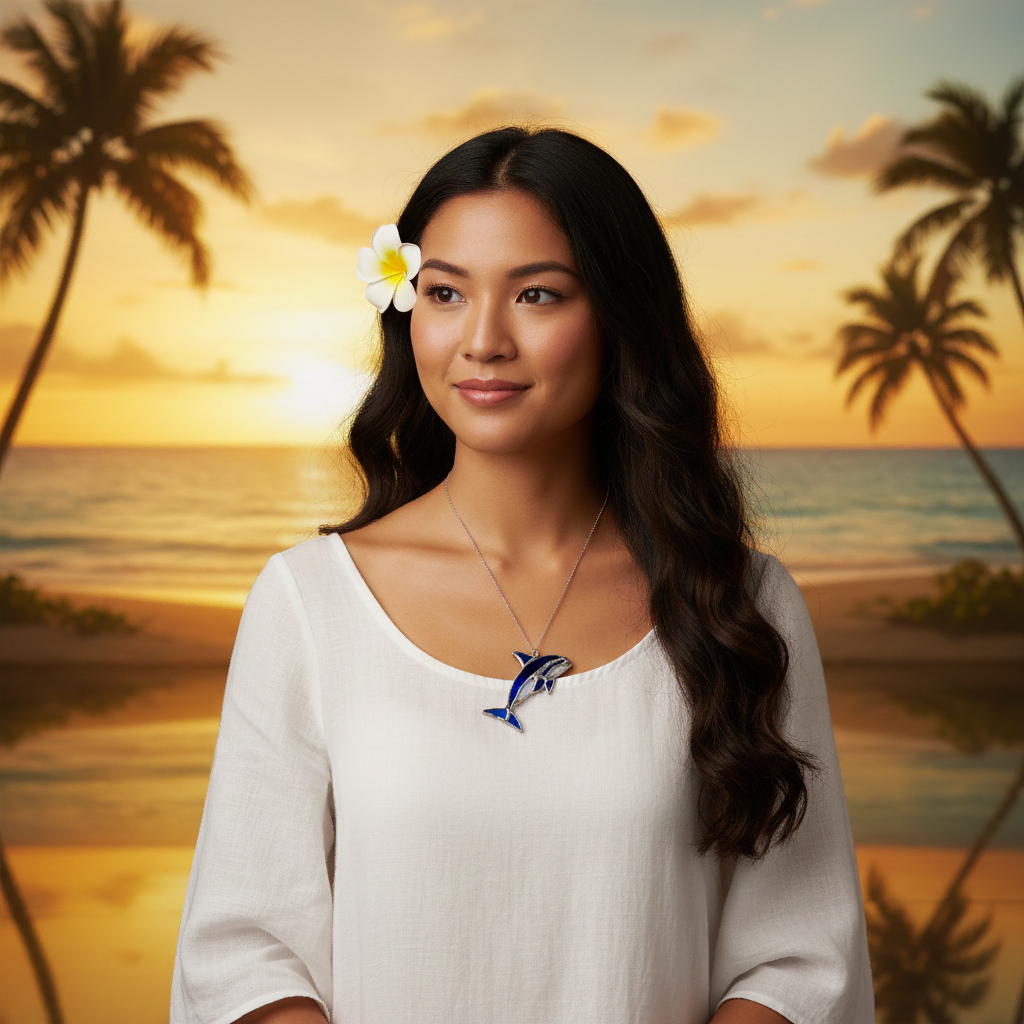
The Dolphin— Born from the spirit of Aloha
Flowers That Tell Stories
Flowers are woven into everyday Hawaiian life.
A handcrafted lei is much more than a beautiful necklace. Traditionally made from flowers, leaves, shells, or seeds, it symbolizes love, friendship, celebration, gratitude, and respect. Offering a lei is considered a meaningful gesture of connection rather than simply a welcome gift.
Many tropical flowers found throughout Hawaii have become symbols recognized around the world:
Their elegant forms and vibrant colors have inspired generations of painters, sculptors, stained glass artists, and designers.
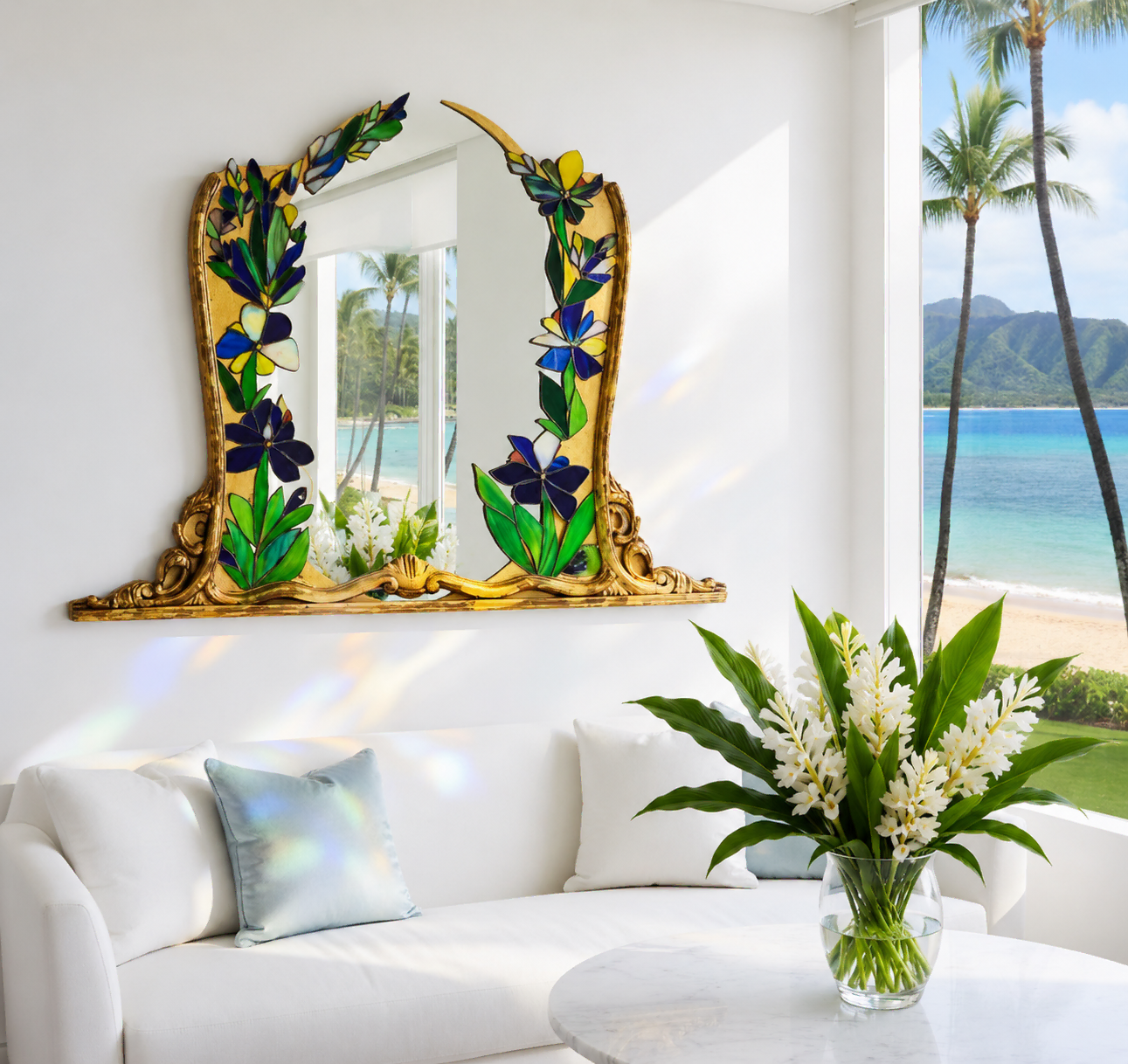
The Ocean as Teacher
For Native Hawaiians, the ocean has always been more than water separating islands.
It is a pathway.
Centuries before modern navigation, Polynesian voyagers crossed thousands of miles of open Pacific using only the stars, winds, ocean swells, clouds, and wildlife as guides. Their remarkable knowledge of nature continues to inspire modern efforts to preserve traditional navigation and cultural heritage.
The ocean teaches patience, observation, and trust—qualities shared by every handmade work of art.
Inspiration for Art
Hawaiʻi offers an endless palette of artistic inspiration:
Ocean waves shimmering beneath tropical sunlight
Sea turtles gliding through coral reefs
Tropical fish with brilliant geometric patterns
Monstera and palm leaves
Hibiscus blossoms
Volcanic landscapes
Rainbows appearing after brief tropical showers
Golden beaches meeting turquoise water
Each element reflects the balance between strength and softness, movement and stillness.
These contrasts are also what make stained glass such a timeless artistic medium.
In my own artistic practice, Hawaiʻi has become a source of inspiration for original handcrafted stained glass artworks.
The colors of the Pacific, tropical flowers, ocean landscapes, and the spirit of aloha find new expression through glass, light, transparency, and color. Each piece transforms an element of the Hawaiian landscape or cultural experience into a contemporary work of art.
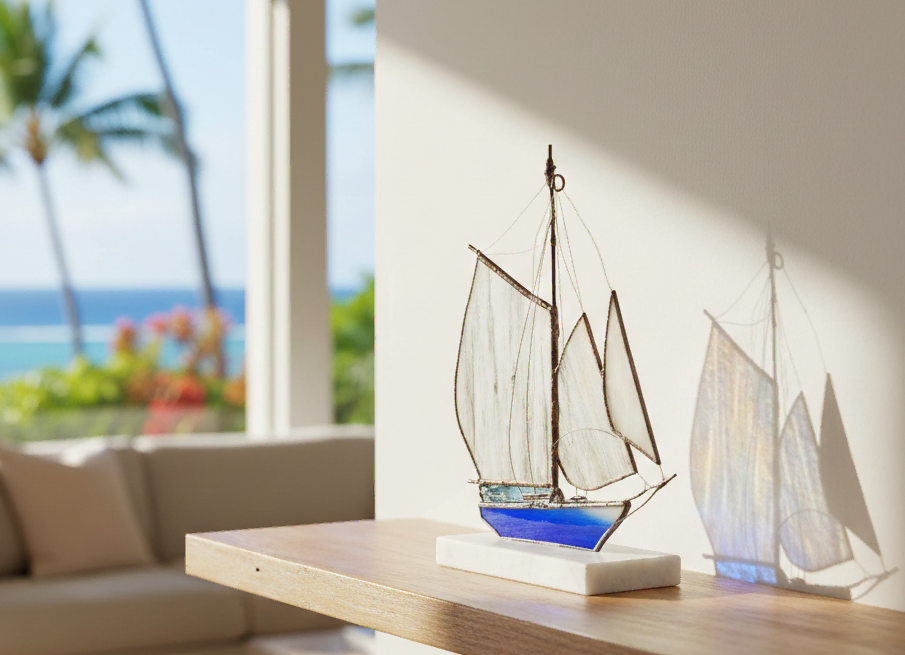
Blue Voyager in Hawaii
A Lasting Lesson
Perhaps Hawaii's greatest gift is its perspective.
Nature is not separate from life. Light is not simply something we see. It is something we experience.
At Marie Art Gallery, this philosophy resonates deeply. Every handcrafted stained glass piece celebrates the same timeless dialogue between light, color, and emotion that has made Hawaiʻi one of the world's most inspiring places.
Sometimes, the most meaningful journeys begin not with a passport, but with a single ray of sunlight passing through art.